Alt text: Exterior entry door exposed to winter freeze-thaw conditions.
Chicago winters don’t just bring cold temperatures. They also bring repeated freeze-thaw cycles, where temperatures move above and below freezing over and over again.
Those swings can affect exterior doors, frames, thresholds, weatherstripping, and the materials surrounding the opening. If your front or patio door already has small gaps, moisture issues, or alignment problems, winter can make those weaknesses more noticeable.
Why Freeze-Thaw Cycles Matter
When temperatures rise above freezing, snow and ice can melt into water.
When temperatures drop again, that moisture can freeze and expand.
Over time, repeated freezing and thawing can put stress on exterior materials around a door opening, especially where moisture is able to collect.
Potential problem areas include:
- Door frames
- Exterior trim
- Thresholds
- Caulked joints
- Sidelights
- Exterior finishes
- Areas where the door meets siding or masonry
A properly installed entry door should be designed to handle changing weather, but aging materials can become more vulnerable.
Door Frames Can Shift Slightly
Wood, metal, and other building materials naturally expand and contract as temperatures change.
In some homes, that movement can make a door that operated normally in warmer weather suddenly feel tighter during winter.
You may notice:
- The door rubbing against the frame
- Difficulty closing it completely
- A latch that no longer lines up
- Uneven gaps around the perimeter
- The door becoming harder to lock
If your door already sticks or drags, repeated seasonal movement can make the issue more noticeable.
For more on alignment problems, see Why Is My Entry Door Hard to Open or Close?.
Moisture Around the Threshold Can Freeze
The bottom of the door is especially important during winter.
Water from rain, melting snow, or tracked-in moisture can collect near the threshold.
If that moisture freezes, it can contribute to:
- Ice buildup
- Difficulty opening the door
- Damage to weatherstripping
- Gaps beneath the door
- Wear around the threshold
Keeping the threshold area clean and properly sealed can help reduce some of these issues.
Alt text: Ice and moisture buildup near an exterior door threshold.
Weatherstripping Becomes More Important in Cold Weather
Weatherstripping helps create a seal between the door and frame.
As it ages, it may become compressed, brittle, cracked, or loose.
Cold temperatures can make worn weatherstripping less flexible, which can reduce how well it seals.
Signs to watch for include:
- Cold air around the edges
- Visible gaps when the door is closed
- Light showing through the perimeter
- Flattened or torn weatherstripping
- A door that only seals when pushed tightly
If you already feel cold air around the door, read Cold Air Around Your Front Door? Here’s What Could Be Causing It.
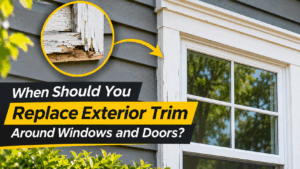
Exterior Trim Can Also Be Affected
The door itself isn’t the only part exposed to winter weather.
Exterior trim and sealant around the opening also deal with moisture and temperature changes.
Look for:
- Cracked caulk
- Peeling paint
- Soft wood
- Separation between trim and siding
- Water staining
- Small gaps that appear to be growing
If moisture gets behind deteriorated trim and repeatedly freezes, surrounding materials may continue to worsen.
Alt text: Exterior door frame and trim exposed to winter weather.
Glass and Sidelights Experience Temperature Swings Too
Many modern entry doors include decorative glass, sidelights, or transoms.
These components are designed for exterior use, but older insulated glass units can sometimes develop seal issues over time.
Warning signs can include:
- Fogging between panes
- Condensation inside the glass unit
- Drafts around the frame
- Cracked or loose glazing components
If you’re considering a more complete entryway upgrade, entry door sidelights and transoms can add light while maintaining modern insulated-glass performance.
Not Every Winter Door Problem Means Replacement
A door that sticks for a few days during extreme weather does not automatically need to be replaced.
Some problems may be related to:
- Minor hinge adjustment
- Worn weatherstripping
- Threshold adjustment
- Seasonal movement
- Localized trim or sealant repairs
Replacement becomes more worth considering when several issues happen together, such as:
- Recurring drafts
- Warping
- Frame deterioration
- Moisture damage
- Failed glass
- Difficulty closing or locking
- Multiple areas that no longer seal properly
The condition of the complete door system matters more than one isolated symptom.
Get Your Entryway Ready for Chicago Weather
Freeze-thaw cycles are a normal part of Chicagoland winters, but aging doors and deteriorated materials can make seasonal problems more noticeable.
At Midwest Windows, Siding & Doors, we help homeowners compare entry doors, frames, glass, weatherstripping, and installation options for their homes.
Homeowners throughout our Chicagoland service areas can call 773-277-2100 or schedule a free consultation to explore their options.