Siding should sit securely against your home and remain relatively quiet during normal weather. If you begin hearing rattling, tapping, or movement when the wind picks up, something may no longer be secured properly.
For homeowners throughout Chicago and the surrounding suburbs, strong winds, temperature changes, aging materials, and years of weather exposure can all affect how siding performs.
A little movement does not always mean the siding needs to be replaced, but recurring noise or visibly loose panels are worth checking before the problem gets worse.
What Causes Siding to Rattle?
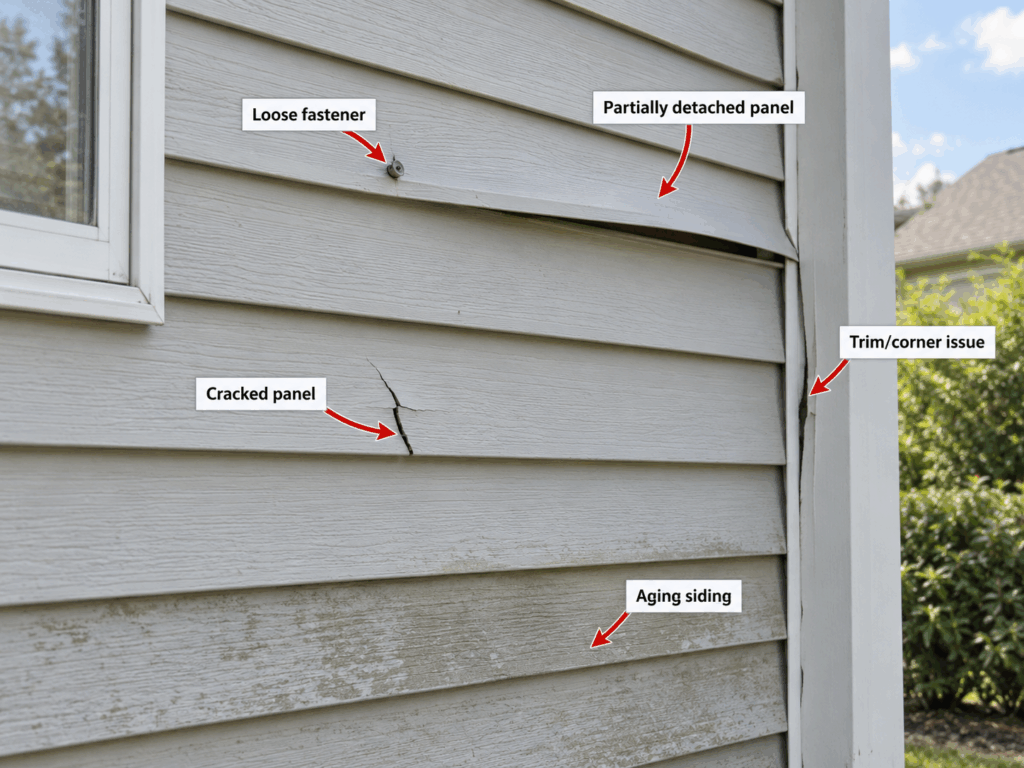
Rattling usually happens when one or more siding panels are able to move more than intended.
Common causes include:
- Loose fasteners
- Panels that have partially detached
- Improper installation
- Aging siding components
- Storm or wind damage
- Cracked or broken panels
- Problems around corners or trim
The exact cause can depend on the siding material and where the movement is occurring.
Loose Fasteners Can Allow Panels to Move
Siding needs to be attached securely while still allowing for the natural expansion and contraction of the material.
If fasteners loosen over time, panels may begin shifting when wind moves across the exterior.
You may hear tapping or rattling before you notice anything visibly wrong.
Repeated movement can place additional stress on surrounding panels and connections, so it is worth addressing rather than simply getting used to the noise.
Wind Can Expose Weak Areas
Chicago-area homes regularly experience windy conditions.
Strong gusts can reveal sections of siding that are already loose or improperly secured.
You may notice:
- One panel lifting slightly
- Corners pulling away
- Siding moving near windows or doors
- A rattling sound from one specific wall
- Noise that only happens during stronger wind
If the same section repeatedly moves during storms, it should be inspected.
Improper Installation Can Cause Ongoing Problems
Siding installation involves more than attaching panels to the wall.
Panels need to be positioned and fastened correctly so they remain secure while still being able to expand and contract.
If siding is installed incorrectly, homeowners may eventually notice loose sections, buckling, uneven panels, or excessive movement.
Some installation issues may not become obvious until the siding has been exposed to several seasons of changing temperatures and weather.
Aging Siding May Become More Vulnerable
Older siding has already spent years exposed to sunlight, wind, rain, snow, and temperature changes.
Over time, materials and fastening points can deteriorate.
Aging siding may develop:
- Cracks
- Loose panels
- Fading
- Brittle areas
- Warping
- Gaps around seams
- Repeated repair needs
If rattling occurs alongside several of these issues, the siding system as a whole may be approaching the point where replacement is worth considering.
Can Loose Siding Let Water In?
Potentially.
Siding is part of a larger exterior wall system designed to help protect the structure beneath it.
If panels pull away, crack, or become damaged, water may have an easier path behind the siding during rain or storms.
That does not mean every loose panel will cause water damage, but recurring movement should not be ignored—especially if you also notice staining, moisture, damaged caulking, or deterioration nearby.
Can Loose Siding Be Repaired?
Sometimes.
If the issue is limited to one panel or a small section and the surrounding siding is still in good condition, a repair may be possible.
The important thing is identifying why the panel became loose.
Simply pushing it back into place may not provide a lasting solution if the underlying fastening system is damaged or the siding was installed incorrectly.
When Does Siding Replacement Make Sense?
Loose siding does not automatically mean you need to replace the exterior of your entire home.
Replacement becomes more worth considering when the problem is widespread or occurs alongside other issues such as:
- Multiple loose or rattling panels
- Cracking or breaking
- Warping or buckling
- Significant fading
- Moisture-related damage
- Frequent repairs
- Sections repeatedly pulling away
The age and overall condition of the siding should also factor into the decision.
Pay Attention After Strong Storms
After severe weather, it is a good idea to visually inspect your home’s exterior from the ground.
Look for siding that appears uneven, shifted, cracked, or separated from the wall.
Also pay attention to new sounds during windy conditions. A rattling noise that did not exist before a storm can be a clue that something has changed.
Avoid climbing onto ladders or attempting repairs in unsafe conditions. If damage is difficult to inspect from the ground, consider having the exterior evaluated professionally.
Siding Replacement for Chicagoland Homes
If your siding is rattling, coming loose, or showing other signs of age or damage, Midwest Windows, Siding & Doors can help you evaluate your options.
We provide professional siding replacement throughout Chicago and the surrounding suburbs, with exterior solutions designed for appearance, durability, and Midwest weather.
Call 773-277-2100 today to schedule your free consultation.