When homeowners think about replacement windows, they often focus on glass packages, frame materials, energy efficiency, and appearance. But there’s another factor that can have a major influence on how a room looks and feels: where the windows are located.
Window placement affects how much natural light enters your home, when that light appears, how much glare you experience, and even how comfortable certain rooms may feel throughout the day.
For homeowners throughout Chicago and the surrounding suburbs, understanding these differences can help when selecting replacement window styles, glass options, and features for different areas of the home.
Why Window Direction Matters
Why Window Direction Matters
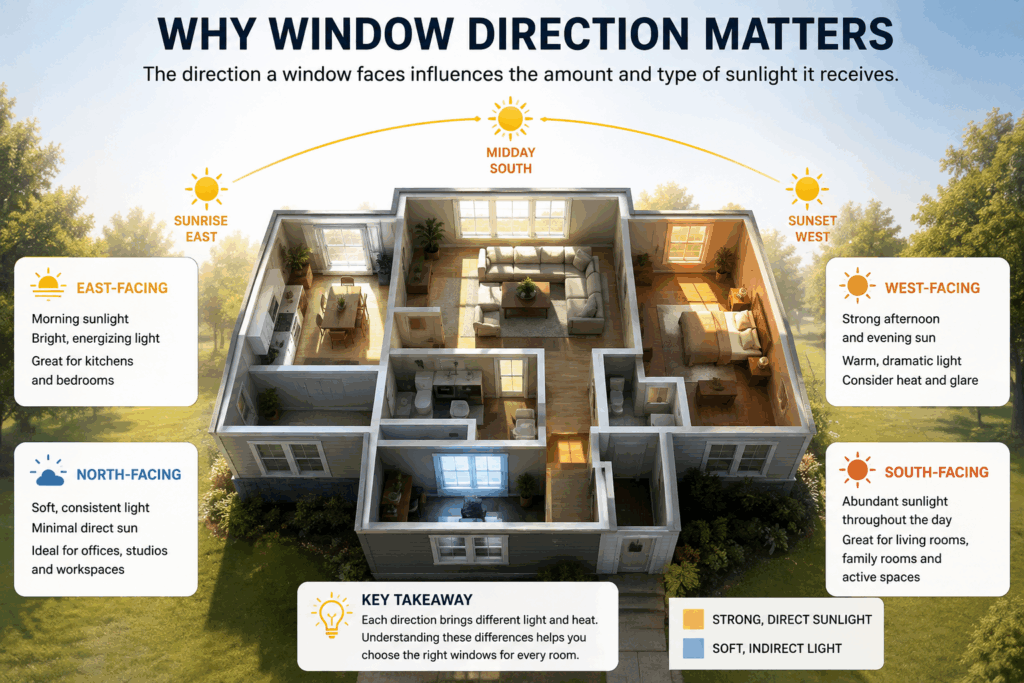
The direction a window faces influences the amount and type of sunlight it receives.
A window facing one direction may receive strong direct sunlight during part of the day, while another may provide softer, more consistent natural light.
Although the exact conditions depend on your home’s surroundings, orientation, nearby buildings, trees, and rooflines, homeowners can generally expect different exposures to behave differently.
Understanding those differences can help you make better window choices for each room instead of selecting the exact same configuration throughout the entire house.
South-Facing Windows
South-facing windows typically have the potential to receive substantial sunlight throughout the day.
That can be an advantage during colder months, when additional sunlight can make interior spaces feel brighter and more inviting.
During warmer weather, however, rooms with significant sun exposure may also experience unwanted heat gain or glare.
When replacing windows in these areas, homeowners may want to consider the glass package, window treatments, and other features that help balance natural light with indoor comfort.
North-Facing Windows
North-facing windows generally receive less direct sunlight than windows facing other directions.
Instead, they can provide softer and more consistent daylight throughout much of the day.
This type of exposure can work particularly well in rooms where homeowners want natural illumination without intense direct sunlight or glare.
If a north-facing room feels dark, choosing a window style with a larger glass area may help make better use of the available natural light.
East-Facing Windows
East-facing windows typically receive stronger sunlight earlier in the day.
That makes them especially noticeable in bedrooms, kitchens, breakfast areas, and other rooms commonly used in the morning.
Morning sunlight can make these spaces feel bright and welcoming, although homeowners who prefer darker bedrooms may want to consider how window treatments and glass options affect early-day light.
By afternoon, east-facing rooms generally experience less direct sunlight.
West-Facing Windows
West-facing windows tend to receive stronger sunlight later in the day.
During the summer, that afternoon and evening exposure can make certain rooms feel noticeably warmer or create glare on televisions, monitors, and other surfaces.
This doesn’t mean west-facing windows are undesirable. They can provide beautiful late-day natural light.
However, understanding that exposure can help homeowners make more informed decisions about glass options, window treatments, and how they use the room.
Window Size Makes a Difference Too
Direction isn’t the only consideration.
The amount of glass in a window can significantly affect how much natural light reaches the interior.
Larger windows can make rooms feel:
- Brighter
- More open
- More connected to the outdoors
- Visually larger
However, bigger isn’t automatically better for every location.
Privacy, wall space, furniture placement, exterior appearance, and energy performance should all be considered when evaluating window size.
Different Window Styles Can Change the Feel of a Room
Replacement window style can also influence natural light.
A picture window, for example, provides a large uninterrupted glass area and can be an excellent choice where maximizing views and daylight is the priority.
Double-hung and casement windows provide ventilation while still allowing substantial natural light.
Bay and bow windows can create additional visual depth while introducing light from multiple angles, depending on their configuration and location.
The best option depends on what you want that particular room and opening to accomplish.
Think About What’s Outside the Window
A technically well-positioned window won’t provide much of a view if it faces a neighboring wall, dense landscaping, or another obstruction.
Before choosing replacement windows, look both inside and outside the home.
Consider:
- Trees and landscaping
- Neighboring homes
- Fences
- Roof overhangs
- Porches
- Exterior structures
- Street exposure
- Privacy
- Attractive views
These factors can influence how much sunlight reaches the glass and whether you want to emphasize or minimize the view from a particular opening.
Natural Light and Privacy Need to Work Together
More glass isn’t always the goal.
Bathrooms, bedrooms, and street-facing rooms may require a different balance between natural light and privacy.
Depending on the project, homeowners may consider window placement, coverings, decorative or privacy glass, and other options that allow daylight into the room without making the space feel overly exposed.
This is another reason window selection should be considered room by room rather than treating every opening identically.
Don’t Forget About Glare
Natural light is usually desirable, but excessive glare can make a room uncomfortable.
You may notice it most when sunlight reflects from:
- Television screens
- Computer monitors
- Hardwood floors
- Countertops
- Glass tables
- Other reflective surfaces
If you already know a particular room experiences strong direct sunlight, mention it when discussing replacement window options.
The goal isn’t necessarily to eliminate sunlight. It’s to create a better balance between daylight, visibility, and comfort.
Chicago’s Seasons Change the Equation
Sunlight doesn’t interact with your home exactly the same way throughout the year.
The angle of the sun changes seasonally, trees lose and regain their leaves, and Chicago’s weather shifts dramatically between summer and winter.
A room that receives intense sunlight during one season may behave differently during another.
That’s why window decisions shouldn’t be based solely on how a room feels on one particular day.
Homeowners should think about how the space functions throughout the year.
Choosing Replacement Windows Room by Room
When replacing several windows, it’s tempting to select one style and configuration and repeat it everywhere.
Consistency can certainly be important for exterior appearance, but each room may have different needs.
For example:
Living rooms may prioritize large views and natural light.
Bedrooms may place greater emphasis on ventilation and privacy.
Kitchens may require windows that work around counters, sinks, or cabinets.
Bathrooms may require privacy while still benefiting from daylight.
Home offices may need natural light without excessive screen glare.
Looking at each room individually can help create a replacement window plan that works for the entire home.
Find the Right Windows for Your Chicago-Area Home
Window placement is only one part of choosing replacement windows, but it can make a noticeable difference in how your home looks and feels every day.
Consider the direction of sunlight, room function, privacy, views, ventilation, glass area, and seasonal conditions when evaluating your options.
Midwest Windows, Siding & Doors helps homeowners throughout Chicago and the surrounding suburbs explore replacement windows suited to their homes, priorities, and local climate.
Contact Midwest Windows, Siding & Doors today to schedule a free estimate and explore replacement window options for your home.