An entry door should open and close smoothly without sticking, dragging, or requiring extra force.
When a door suddenly becomes difficult to operate, the problem can come from several places—including the hinges, frame, weatherstripping, seasonal movement, or the door itself.
For homeowners throughout Chicago and the surrounding suburbs, changing temperatures and humidity can make these issues more noticeable throughout the year.
Sometimes the problem is minor and easy to correct. In other cases, a difficult door can be a sign that the frame, hardware, or door system needs more attention.
The Door May Be Out of Alignment
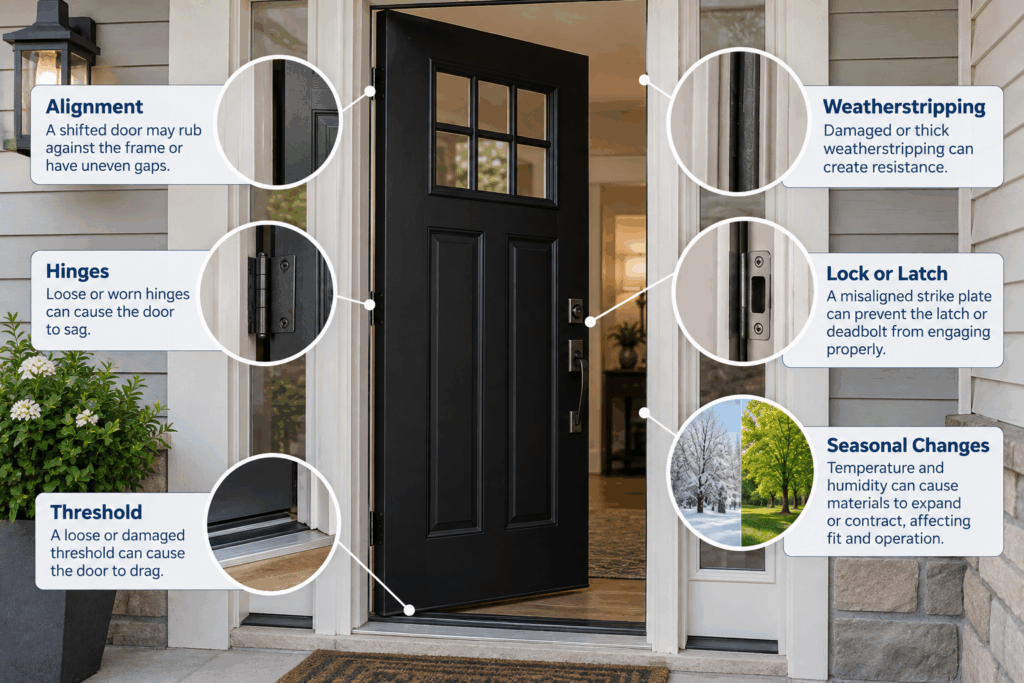
One of the most common reasons an entry door becomes difficult to operate is alignment.
If the door shifts slightly within the frame, it may begin rubbing against the jamb or threshold.
You may notice:
- The door sticking near the top or bottom
- The latch no longer lining up
- Uneven gaps around the door
- The door needing to be pushed or lifted to close
- Scrape marks along the frame or threshold
Small alignment problems may sometimes be corrected with hardware adjustments, but recurring movement can point to a larger issue.
Loose or Worn Hinges Can Cause the Door to Sag
Entry doors are heavy, and their hinges carry that weight every day.
Over time, hinge screws can loosen or hardware can wear down. When that happens, the door may begin sagging slightly.
Even a small amount of movement can cause the bottom or side of the door to rub against the frame.
Check whether the hinges appear loose or whether the door seems lower on the latch side than it used to.
In some cases, tightening or replacing hinge hardware can restore proper operation.
Seasonal Changes Can Affect Door Fit
Chicago weather can create noticeable changes in how doors operate.
Wood and other building materials can expand and contract with changes in temperature and humidity.
A door that works perfectly during one season may begin sticking during another.
Cold winter weather, summer humidity, and repeated seasonal changes can all make an existing fit or alignment problem more noticeable.
If the problem only occurs occasionally, seasonal movement may be contributing. If it continues year-round or becomes worse over time, the door should be evaluated more closely.
Weatherstripping Can Create Resistance
Weatherstripping helps create a seal around the door and reduce unwanted air leakage.
However, damaged, shifted, or incorrectly installed weatherstripping can sometimes make a door difficult to close.
You may need to push harder than usual to engage the latch, or the door may spring back slightly after you try to close it.
Look for weatherstripping that is:
- Torn
- Folded
- Compressed unevenly
- Pulling away from the frame
- Too thick for the existing opening
Replacing worn weatherstripping may help if the door itself is otherwise operating correctly.
The Threshold Could Be Causing the Problem
The threshold sits along the bottom of the doorway and helps create a seal beneath the door.
If it becomes loose, damaged, or improperly adjusted, the bottom of the door may begin dragging.
You may notice scuff marks, resistance near the floor, or difficulty closing the door completely.
Dirt and debris can also build up around the threshold, so cleaning the area is a good first step before assuming there is a larger problem.
The Door or Frame May Have Warped
Over time, moisture exposure, age, temperature changes, or material deterioration can affect the shape of a door or frame.
A warped door may no longer fit evenly inside the opening.
Common signs include:
- Uneven gaps around the perimeter
- One corner sticking
- Difficulty engaging the deadbolt
- Visible bowing
- Drafts around certain areas of the door
- Increasing difficulty opening or closing
If the door or frame itself has changed shape, hardware adjustments alone may not provide a long-term solution.
The Lock or Latch May Be Misaligned
Sometimes the door closes normally but the latch or deadbolt will not engage.
This can happen when the strike plate and locking hardware no longer line up properly.
You might notice that you need to:
- Lift the door handle
- Push firmly against the door
- Pull the door toward you
- Move the door slightly before the lock works
A minor adjustment may solve the problem.
Repeated misalignment, however, may indicate that the door has shifted within the frame.
Moisture Damage Can Affect Door Operation
Water intrusion around a door opening can affect the frame, trim, threshold, or surrounding materials.
If moisture causes wood components to swell or deteriorate, the door may become increasingly difficult to operate.
Watch for:
- Soft or damaged trim
- Peeling paint
- Staining around the frame
- Swelling near the bottom of the door
- Cracked caulk
- Musty odors or visible moisture
If water damage is present, identifying the source should be a priority.
Can a Hard-to-Operate Door Be Repaired?
Often, yes.
Depending on the cause, possible solutions may include:
- Tightening hinge screws
- Adjusting the strike plate
- Replacing worn weatherstripping
- Cleaning or adjusting the threshold
- Replacing damaged hardware
- Correcting minor alignment issues
The right fix depends on whether the problem is limited to hardware or involves the door and frame themselves.
When Does Entry Door Replacement Make Sense?
A sticking or difficult door does not automatically need to be replaced.
Replacement may be worth considering when the problem occurs alongside other issues such as:
- Significant warping
- Recurring alignment problems
- Drafts around the door
- Water damage
- Deteriorated frames
- Cracked or damaged door materials
- Failed hardware
- Poor energy performance
- Frequent repairs
The age and overall condition of the door should also factor into the decision.
If you are repeatedly repairing an older door and still experiencing operational or comfort problems, a new entry door may provide a better long-term solution.
Why Professional Door Installation Matters
A new entry door needs to fit properly within the opening.
Accurate measurements, proper alignment, secure fastening, insulation, sealing, and threshold adjustments all affect how the finished door operates.
Even a quality door can become difficult to use if the installation is not completed correctly.
Professional installation also helps ensure that the door closes securely and creates the intended seal around the opening.
Entry Doors for Chicagoland Homes
If your entry door is sticking, dragging, difficult to lock, or becoming harder to operate, Midwest Windows, Siding & Doors can help you explore your options.
We provide professionally installed entry doors for homeowners throughout Chicago and the surrounding suburbs, with options designed for appearance, security, performance, and Midwest weather.
Call 773-277-2100 to schedule your free consultation.