If you can feel cold air around your front door, the door itself may not be the only problem.
Drafts can come from worn weatherstripping, gaps beneath the door, alignment issues, or even the way the frame was installed. As Chicagoland temperatures drop, these small problems can become much easier to notice.
Here are some of the most common reasons your entry door may feel drafty.
Worn or Damaged Weatherstripping
Weatherstripping creates a seal between the door and frame when the door is closed.
Over time, it can become compressed, cracked, loose, or brittle.
Check for:
- Cracks or tears
- Flattened weatherstripping
- Missing sections
- Areas where the seal no longer touches the door
- Cold air along the sides or top of the frame
If the weatherstripping is damaged, replacing it may improve the seal without requiring a full door replacement.
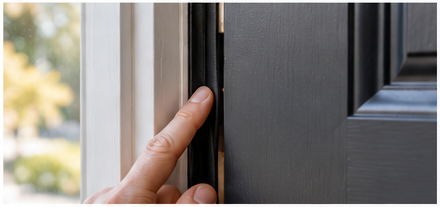
Weatherstripping along the edge of a residential front door.
There May Be a Gap Under the Door
The bottom of the door is another common place for cold air to enter.
A properly fitted sweep and threshold should help limit the gap between the door and the floor.
Problems can develop when:
- The door sweep becomes worn
- The threshold shifts
- The door settles
- The door no longer sits evenly in the opening
If you can see daylight beneath a closed door, that is usually a good reason to take a closer look.
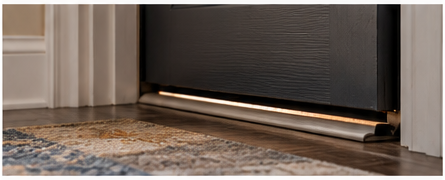
Gap beneath a residential front door near the threshold.
The Door May Be Out of Alignment
A door does not have to look obviously crooked to have an alignment problem.
Over time, normal use, movement in the home, loose hinges, or seasonal changes can cause the door to shift slightly.
Signs can include:
- Difficulty closing the door
- A latch that no longer lines up
- Rubbing against the frame
- Uneven gaps around the perimeter
- Needing to push or pull the door to lock it
These problems can prevent the weatherstripping from making consistent contact around the entire opening.
If your door has become harder to operate, read Why Is My Entry Door Hard to Open or Close? for more possible causes.
The Frame May Be Part of the Problem
Sometimes the door itself is in good condition, but cold air is entering around the frame.
Gaps between the door frame and the surrounding wall can allow outside air to move into the home if the area was not properly insulated or sealed.
You may notice:
- Cold spots around interior trim
- Drafts near the sides of the door
- Air movement that does not seem to come directly through the door
- Gaps between trim and the surrounding wall
This is one reason the quality of installation matters just as much as the door you choose.
Check the Glass and Sidelights
If your entrance includes glass, sidelights, or a transom, pay attention to those areas too.
Older glass may feel noticeably colder during winter, and failed seals can sometimes lead to fogging or condensation between the panes.
The perimeter around sidelights should also be properly sealed.
If you are considering a larger entryway upgrade, entry door sidelights and transoms can add natural light while still allowing you to choose modern insulated glass options.
Older Doors May Simply Perform Differently
Not every draft can be solved with new weatherstripping.
Older exterior doors may have less insulation, worn seals, outdated glass, damaged frames, or years of movement that make it difficult to create a consistent seal.
Modern entry doors can include features such as:
- Insulated cores
- Updated weatherstripping
- Improved thresholds
- Insulated glass
- Better locking systems
- More durable frame systems
If security and insulation are priorities, see The Best Front Entry Doors for Security and Insulation.
Should You Repair or Replace a Drafty Front Door?
That depends on what is causing the draft.
A small weatherstripping issue may be relatively simple to address.
Replacement may make more sense when the door also has:
- Significant warping
- Frame damage
- Recurring alignment problems
- Deteriorated materials
- Failed glass
- Multiple areas of air leakage
The condition of the entire entry system should guide the decision rather than the draft alone.
Get Your Entryway Ready for Colder Weather
A drafty front door can make the entrance to your home noticeably less comfortable once winter arrives.
At Midwest Windows, Siding & Doors, we help homeowners compare entry doors, glass, sidelights, hardware, and installation options for their homes.
Homeowners throughout our Chicagoland service areas can call 773-277-2100 or schedule a free consultation to explore their options.