
When homeowners shop for replacement windows, most of the attention goes to glass, frame material, energy efficiency, and appearance.
But one of the most important parts of a window installation may be something you barely see once the project is finished: window flashing.
Flashing helps direct water away from the window opening and surrounding wall. When it is missing, damaged, or installed incorrectly, moisture can find its way behind the exterior and create problems that may not be obvious right away.
What Is Window Flashing?
Window flashing is a water-resistant material installed around the window opening to help prevent rain and moisture from entering the wall system.
Depending on the home and installation, flashing may include:
- Flashing tape
- Sill pans
- Metal flashing
- House wrap integration
- Sealants used in specific areas
These components work together to help guide water toward the exterior rather than allowing it to move behind the window.
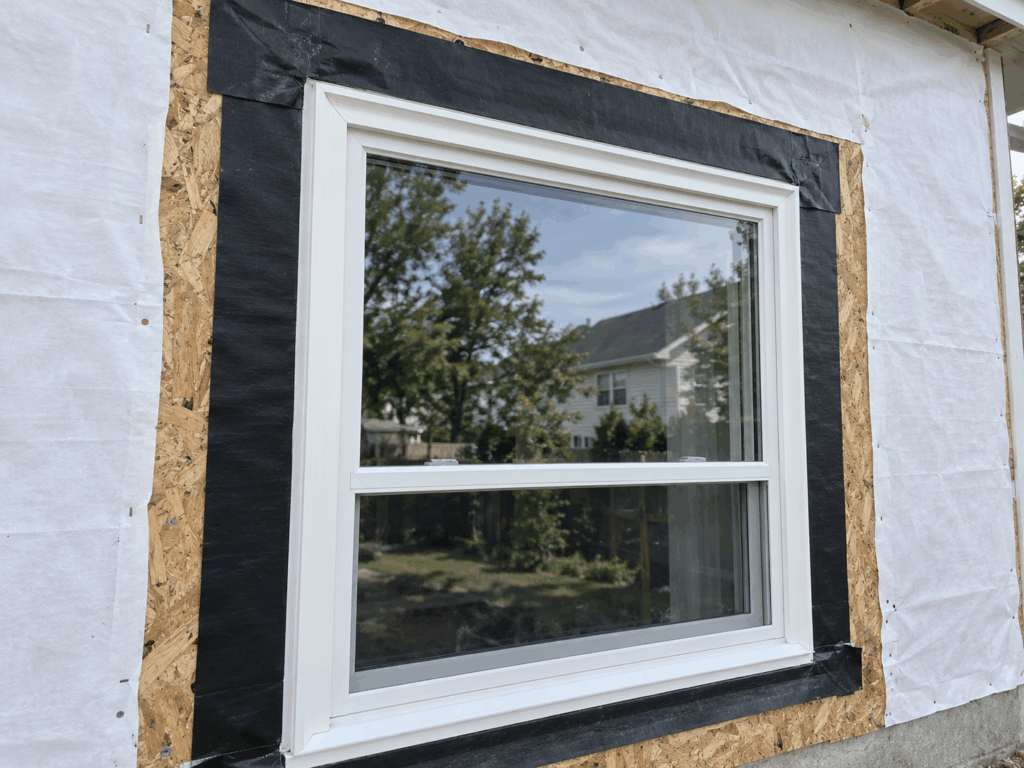
Window flashing installed around a residential window opening.
Why Is Flashing So Important?
Exterior siding and trim are not designed to stop every drop of water on their own.
Wind-driven rain can work its way into small joints around windows, especially during severe weather.
Proper flashing provides another layer of protection by helping water move away from the opening.
Without it, moisture can potentially reach:
- Wood framing
- Insulation
- Interior drywall
- Exterior sheathing
- Window trim
Over time, repeated exposure can contribute to staining, deterioration, mold growth, or rot.
Flashing Works With the Rest of the Wall
Window flashing should not be treated as a separate piece of the installation.
It needs to work with the surrounding weather-resistant barrier, siding, trim, and window itself.
Water that reaches the wall should have a clear path downward and outward instead of becoming trapped behind exterior materials.
This is one reason professional window installation can be just as important as the window product itself.
Signs There May Be a Flashing Problem
Flashing problems are often hidden behind trim or siding, so homeowners may not see the actual cause.
Instead, watch for symptoms such as:
- Water staining around the window
- Peeling paint
- Soft or deteriorated trim
- Damp drywall
- Recurring leaks after rain
- Musty odors near the opening
- Discoloration below the window
If you’re already seeing moisture near the exterior trim, read What Happens When Water Gets Behind Your Window Trim.
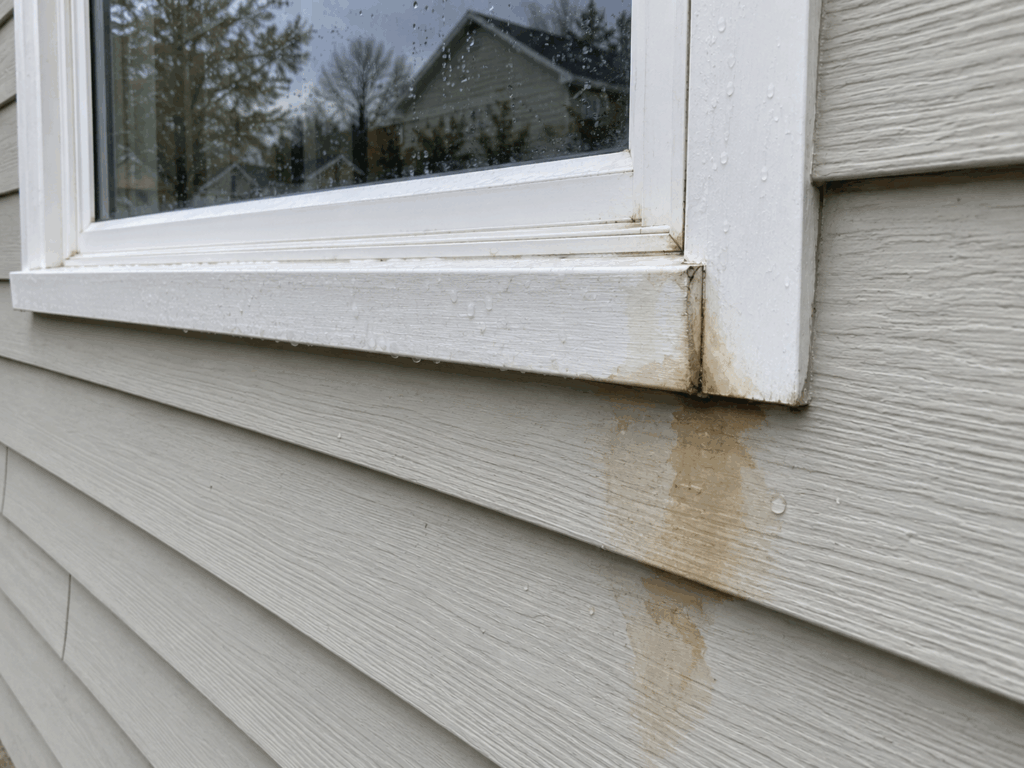
Water staining near exterior window trim.
Can Caulk Fix a Window Leak?
Sometimes caulk can address a small failed joint, but it should not automatically be treated as the solution to every leak.
If water is entering because flashing is missing or incorrectly installed, adding more sealant to the exterior may only hide the problem temporarily.
The actual source of the moisture needs to be identified.
Window systems are designed to manage water, not simply seal every possible opening with caulk.
Flashing Is Especially Important During Full-Frame Replacement
During a full-frame replacement, the existing window is removed down to the rough opening.
This gives installers more access to inspect the surrounding area and address flashing, insulation, or water damage before the new window is installed.
An insert replacement leaves more of the existing frame in place.
Our guide to insert vs. full-frame window replacement explains the difference between the two installation methods.
Older Windows May Hide Existing Damage
A window can appear reasonably normal from the inside while the surrounding framing has already experienced moisture exposure.
This is especially possible when an older installation has leaked slowly over many years.
During replacement, removing damaged materials and addressing the source of the moisture is important before installing the new window.
Simply covering deterioration with a new window does not correct the underlying problem.
Ask About Installation, Not Just the Window
When comparing replacement window estimates, homeowners should ask how the opening will be prepared and protected.
Questions can include:
- How will the opening be flashed?
- Will existing flashing be inspected?
- How is the flashing integrated with the wall?
- What happens if water damage is discovered?
- Is the installation insert or full-frame?
- How will the exterior be finished?
A quality replacement window still depends on proper installation.
At Midwest Windows, Siding & Doors, we help homeowners throughout our Chicagoland service areas evaluate both the window itself and the installation details that help protect the home.
Call 773-277-2100 or schedule a free consultation to discuss your replacement window project.