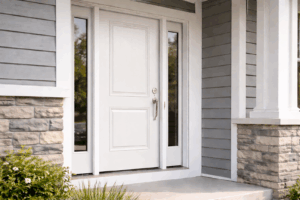
If your home feels colder than it should in winter, your windows might not be the only issue. In many Midwest homes, the front entry door is one of the biggest sources of heat loss—and it often goes unnoticed.
For homeowners across the Chicago area, winter temperatures put constant pressure on entry doors that were never designed for long-term energy efficiency. Over time, even a solid-looking door can quietly drive up heating costs and reduce comfort.
Here’s how your front door may be costing you heat—and what you can do about it.
How Heat Escapes Through Your Front Door
Unlike walls, entry doors are thinner and more exposed to the elements. When materials break down, heat loss accelerates quickly.
Common Problem Areas
- Gaps around the frame
- Worn weatherstripping
- Thin or hollow-core door construction
- Poor insulation inside the door slab
Even small air leaks can have a noticeable impact during long Midwest winters.
Drafts You Feel—and Ones You Don’t
Some heat loss is obvious. You may feel cold air near the entryway or notice temperature swings in adjacent rooms.
Hidden Sources of Heat Loss
- Warm air escaping through the door edges
- Cold air seeping in behind trim or thresholds
- Pressure changes that pull heat out when the HVAC system runs
Over time, these hidden leaks add up to higher utility bills and inconsistent comfort.
Older Entry Doors Are the Biggest Culprits
Many homes still have entry doors installed decades ago. While they may look fine on the surface, their internal construction often falls short of today’s standards.
Common Issues With Older Doors
- Lack of insulated cores
- No thermal breaks
- Loose or outdated sealing systems
- Inefficient glass inserts
In cold climates, these weaknesses become especially costly.
Glass Inserts Can Increase Heat Loss—If They’re Outdated
Decorative glass panels are popular, but older glass inserts are often single-pane or poorly sealed.
Problems We See Most Often
- Cold glass radiating chill into the home
- Condensation forming during winter
- Air leakage around the glass frame
Modern insulated glass inserts solve these issues while still allowing natural light into your entryway.
The Role of the Door Frame and Installation
Even the best door won’t perform well if the frame or installation is compromised.
Installation Issues That Cause Heat Loss
- Improper shimming during installation
- Uninsulated gaps behind the frame
- Settling that causes the door to sit unevenly
Professional installation ensures the entire door system—not just the slab—works together to keep heat inside.
What Makes a Front Door Energy-Efficient?
Today’s high-performance entry doors are engineered specifically for temperature control.
Features to Look For
- Insulated fiberglass or steel construction
- Tight, compression-style weatherstripping
- Energy-efficient glass with Low-E coatings
- Thermally efficient frames and thresholds
These upgrades significantly reduce air leakage and heat transfer.
Comfort, Security, and Efficiency Go Hand in Hand
Replacing an inefficient front door isn’t just about energy savings.
Added Benefits Homeowners Notice
- More consistent indoor temperatures
- Reduced strain on heating systems
- Improved security and durability
- Stronger curb appeal at the entryway
It’s one of the few upgrades that delivers comfort, efficiency, and appearance all at once.
When Is It Time to Replace Your Entry Door?
You may want to consider replacement if:
- You feel drafts near the door in winter
- The door surface feels cold to the touch
- Your heating bills continue to rise
- The door is difficult to seal or latch properly
In Midwest climates, these signs rarely improve on their own.
Stop Losing Heat Through Your Front Door
If your entry door is letting cold air in and warm air out, it may be time for an upgrade. Schedule a consultation with Midwest Windows, Siding & Doors to explore energy-efficient entry door options designed for Midwest winters—installed with precision for long-term comfort and performance.