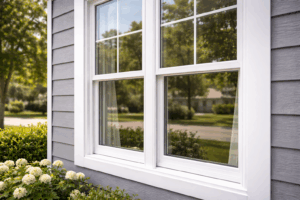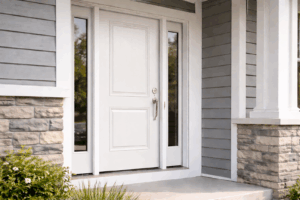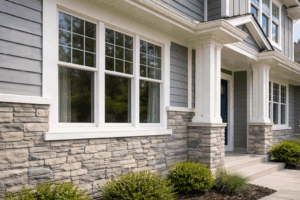
If your heating bills spike every winter in Naperville, Schaumburg, Aurora, or anywhere in Greater Chicago, your windows may be the reason.
Old or poorly performing windows are one of the biggest sources of heat loss in Midwest homes. When temperatures drop below freezing and lake-effect winds pick up, inefficient windows allow warm air to escape and cold drafts to creep inside.
Let’s break down why this happens — and what you can do about it.
How Heat Escapes Through Windows
Windows lose heat in three main ways:
1. Conduction Through Glass
Older windows often have single-pane glass or outdated double-pane units. Glass is not a strong insulator by itself. When it’s freezing outside, heat naturally transfers from the warm interior to the cold exterior.
Modern windows use insulated glass units (IGUs) with gas fills and Low-E coatings to slow that transfer. Older units do not.
2. Air Leakage Around Frames
In Chicago’s windy winters, air infiltration becomes a serious issue. If seals, weatherstripping, or frames degrade, cold air pushes in while warm air leaks out.
Even small gaps around sashes and frames can dramatically increase heating costs.
3. Radiation and Draft Effect
If you’ve ever felt cold sitting near a window, even when it’s closed, you’ve experienced radiant heat loss. Your body radiates heat toward the colder surface of the glass.
This creates discomfort, even if your thermostat says the room is warm.
Why This Problem Is Worse in the Midwest
Chicago’s climate makes window performance critical.
- Long winters
- Sub-freezing temperatures
- Strong wind gusts
- Freeze-thaw cycles
- High seasonal temperature swings
Homes in suburbs like Elk Grove Village and Hanover Park often have older housing stock with windows that are 15–30 years old. Those windows were not built to today’s efficiency standards.
The result? Higher energy use and uneven indoor temperatures.
Signs Your Windows Are Causing Heat Loss
You don’t need a thermal camera to spot issues. Watch for these warning signs:
- Drafts near window frames
- Condensation between panes
- Ice buildup on interior glass
- Noticeable cold zones near windows
- Heating system running constantly
- Rising gas or electric bills
If your furnace seems to run nonstop during winter, your windows may be forcing it to work overtime.
The Cost of Inefficient Windows
Heating bills in Greater Chicago can climb significantly during peak winter months. When windows underperform, your HVAC system compensates by running longer cycles.
Over time, this leads to:
- Increased utility expenses
- Added wear on your furnace
- Reduced indoor comfort
- Lower resale appeal
While every home is different, replacing inefficient windows can improve overall energy performance and comfort almost immediately.
What Makes Modern Windows More Efficient?
Double and Triple Pane Glass
Modern windows use multiple panes separated by insulating gas. These layers reduce heat transfer significantly compared to older single-pane models.
Triple-pane options offer even greater insulation, especially valuable in harsh Midwest winters.
Low-E Glass Coatings
Low-emissivity (Low-E) coatings reflect heat back into your home during winter while allowing natural light inside. This improves comfort without sacrificing brightness.
Argon or Krypton Gas Fills
These inert gases between panes reduce convection and slow heat transfer.
Advanced Frame Materials
Premium vinyl and fiberglass frames offer better thermal performance and tighter seals than older aluminum or wood frames.
Professional Installation
Even the best window can underperform if installed poorly. Precision installation prevents air leakage and maximizes efficiency.
How Much Can Window Replacement Cost?
For homeowners in Naperville, Schaumburg, or Aurora, high-quality window replacement typically ranges from:
$900–$1,500 per window installed, depending on size, frame material, and glass package.
While this is an investment, many homeowners prioritize long-term comfort, energy stability, and improved home value.
Energy Savings vs. Comfort Improvements
While energy savings are important, comfort is often the most noticeable benefit.
After replacing old windows, homeowners frequently report:
- Fewer drafts
- More consistent indoor temperatures
- Quieter interiors
- Less condensation
- Improved natural light
In Chicago’s climate, comfort and efficiency go hand in hand.
Is It Time to Replace Your Windows?
If your windows are over 15–20 years old and showing signs of wear, it may be time to evaluate replacement options.
High-performance windows designed for Midwest conditions can:
- Reduce heat loss
- Lower HVAC strain
- Improve indoor comfort
- Enhance curb appeal
Not every home needs immediate replacement. But if winter bills keep rising and comfort keeps dropping, your windows deserve a closer look.
Lower Heating Bills Start with Better Windows
If rising winter energy costs are frustrating you, it may be time to upgrade. Midwest Windows, Siding & Doors installs premium windows designed specifically for Chicago’s climate.
Schedule your consultation today and discover how modern windows can transform your comfort and efficiency this winter.