Why Chicago Winters Are Tough on Entry Doors
Greater Chicago winters bring freezing temperatures, strong winds, and constant moisture. Over time, these conditions stress older entry doors—especially those installed decades ago without modern materials or insulation.
When a door warps, it no longer seals correctly. That leads to drafts, higher energy bills, and doors that stick or won’t latch.
How Cold Weather Causes Doors to Warp
Temperature Swings
Rapid shifts from sub-zero outdoor air to warm indoor heat cause materials to expand and contract. Older doors weren’t designed to handle these extremes.
Moisture Absorption
Snow, sleet, and freezing rain introduce moisture. When wood doors absorb water and then freeze, the internal structure shifts permanently.
Aging Door Frames
Even if the door slab holds up, older frames can twist, pulling the door out of square.
Signs Your Entry Door Is Warping
- Gaps along the top or sides
- Daylight visible around the door
- Difficulty opening or closing
- Drafts near the entryway
- Increased heating costs
These issues often worsen during peak winter months in Schaumburg, Naperville, and other exposed suburbs.
Why Temporary Fixes Don’t Last
Weatherstripping and planing can help briefly, but they don’t solve the underlying structural problem. Once a door warps, replacement is usually the only long-term solution.
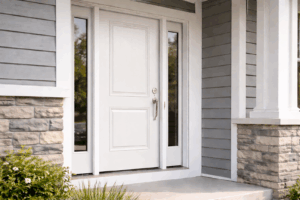
Modern Entry Doors Are Built for Chicago Weather
Premium replacement entry doors use:
- Engineered cores resistant to expansion
- Insulated fiberglass or steel skins
- Multi-point locking systems
- Thermally broken frames
These features keep doors square, sealed, and smooth-operating—even in January cold snaps.
When Replacement Makes Sense
If your door is:
- Over 20 years old
- Made from solid wood without insulation
- Showing visible distortion
…it’s likely costing you comfort and efficiency.
Upgrade to an Entry Door Built for Chicago Winters
If your entry door struggles every winter, it’s likely time for an upgrade. Midwest Windows, Siding & Doors installs premium entry doors engineered for Chicago’s climate—delivering tighter seals, smoother operation, and lasting curb appeal.