A Drafty Front Door Can Make Your Home Feel Colder
If your entryway feels chilly in winter, your front door may be part of the problem.
Cold air can slip in around old weatherstripping, loose thresholds, warped panels, or gaps in the frame. In Greater Chicago, that can make a real difference during cold months, especially in homes around Schaumburg, Naperville, Roselle, Hanover Park, Streamwood, Aurora, and Elk Grove Village.
A front door should help protect your home from weather. It should also open, close, and seal smoothly. When it does not, comfort and energy efficiency can suffer.
Here is how to tell if your front door is letting cold air in.
1. You Feel Cold Air Around the Door
The simplest sign is a draft you can feel.
Stand near the door on a cold or windy day. Move your hand around the edges, especially near the bottom, corners, lock side, and hinge side.
If you feel cold air moving through, the door may not be sealing correctly.
Sometimes the issue is old weatherstripping. Other times, the door slab or frame has shifted over time.
2. Light Shows Around the Edges
Close the door and look around the perimeter.
If you can see daylight along the sides, top, or bottom, air can likely pass through too.
A small gap may not seem serious, but winter wind can push cold air through even narrow openings. This can make the entry area feel uncomfortable and may affect nearby rooms.
3. The Door Is Hard to Close or Latch
A front door should close firmly without slamming, lifting, or pulling.
If you have to push hard to latch it, the door may be misaligned. If the lock does not line up, the frame may have shifted. If the door rubs against the frame, it may be warped or swollen.
These problems can keep the door from sealing tightly.
4. The Weatherstripping Looks Worn
Weatherstripping helps seal the small space between the door and frame.
Over time, it can crack, flatten, tear, or pull away. Once that happens, cold air can enter around the edges.
Check the sides and top of the frame. Also check the sweep at the bottom of the door. If the material looks damaged or no longer touches the door evenly, it may need attention.
5. The Threshold Has Gaps
The threshold is the piece at the bottom of the doorway. It works with the door sweep to help block air and water.
If the threshold is loose, uneven, cracked, or worn down, drafts can enter near the floor.
This is one of the most common places to feel cold air. It is also an area where rain, snow, and melting ice can cause problems if the seal is poor.
6. You Notice Moisture Near the Entry
Drafts are not the only concern. A poorly sealed front door can also let in moisture.
Look for water stains, soft trim, peeling paint, swelling, or dark marks near the frame or threshold.
Moisture problems should be checked early. They can damage trim, flooring, and the surrounding structure over time.
7. Your Entryway Is Always Colder Than Other Rooms
Some entryways naturally feel cooler, especially if they open to a foyer or stairwell. But if the area near your front door is much colder than the rest of the home, the door may not be performing well.
This is especially common with older entry doors, single-pane sidelites, worn frames, or doors that no longer fit tightly.
Can a Drafty Door Be Repaired?
Sometimes, yes.
New weatherstripping, a new door sweep, or threshold adjustments may help if the door and frame are still in good condition.
But repair is not always enough. If the door is warped, damaged, poorly insulated, or no longer fits the frame, replacement may be the smarter option.
When Replacement Makes More Sense
Consider replacing your front door if you notice repeated drafts, visible gaps, moisture damage, soft trim, broken locks, dents, rust, or a door that no longer closes properly.
A new entry door can improve comfort, curb appeal, security, and weather protection.
It can also update the entire look of your home, especially when paired with new windows, siding, or trim.
Choose a Door That Fits Chicago Weather
Greater Chicago homes need entry doors that can handle cold winters, warm summers, rain, snow, and wind.
Look for a quality door with strong insulation, durable materials, reliable weatherstripping, and a tight professional installation.
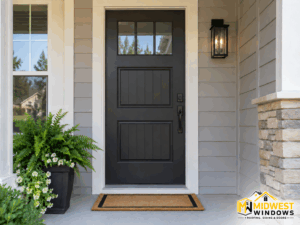
Style matters too. Your front door should match your home’s exterior, whether you have brick, siding, stone, or a mix of materials.
Popular choices include classic panel doors, doors with glass inserts, darker modern finishes, warm wood-look styles, and designs with sidelites.
Final Takeaway
If your front door is letting cold air in, the signs are usually easy to spot once you know where to look.
Check for drafts, daylight gaps, worn weatherstripping, loose thresholds, moisture marks, and trouble closing or locking the door.
Small issues may be repairable. But if your door is older, damaged, or no longer sealing well, replacement can make your home more comfortable and more polished from the street.
Ready to Stop Cold Air at the Door?
Midwest Windows, Siding & Doors can help you choose a front door that fits your home, improves comfort, and gives your Greater Chicago exterior a clean, premium finish.