Can a New Front Door Lower Your Energy Bills?
Illinois winters are no joke. Between freezing temperatures, wind chill, and long heating seasons, even small air leaks can drive up your utility bills.
Many homeowners in Schaumburg, Naperville, Aurora, and throughout Greater Chicago don’t realize how much energy is lost through their front door. If your door is 15 to 25 years old, it may be working against your HVAC system every day.
In 2026, energy efficiency is more advanced than ever. Here’s how a new front door can reduce your energy costs and improve year-round comfort.
How Much Energy Can a Front Door Lose?
Older entry doors often suffer from:
- Worn-out weatherstripping
- Warped frames
- Poor insulation cores
- Single-pane decorative glass
- Improper installation
Even small gaps around the perimeter allow cold air to enter and warm air to escape. In winter, this forces your furnace to work harder. In summer, cooled air seeps out.
Over time, those inefficiencies add up.
Why Illinois Homes Are Especially Vulnerable
Homes in the Chicago suburbs experience:
- Sub-zero winter temperatures
- Strong winds
- Freeze–thaw expansion
- Humid summer heat
Doors expand and contract throughout the year. Builder-grade doors installed decades ago were not designed with today’s insulation standards in mind.
If you feel a draft near your entryway, your energy loss may already be significant.
What Makes a Front Door Energy Efficient in 2026?
Modern entry doors are engineered for performance.
Insulated Cores
Premium fiberglass and steel doors use polyurethane foam cores. This dramatically improves thermal resistance compared to hollow or wood-core doors.
Advanced Weatherstripping
Compression seals create a tight barrier around the entire door perimeter. When properly installed, they reduce air infiltration.
Multi-Point Locking Systems
Multi-point locks pull the door tightly into the frame. This improves both security and sealing performance.
Energy-Efficient Glass Packages
If your door includes decorative glass, modern insulated glass units reduce heat transfer. Many feature low-emissivity (Low-E) coatings that reflect heat back inside during winter.
The Real Cost Savings
Exact savings depend on:
- Home size
- Existing insulation
- HVAC efficiency
- Utility rates
However, Illinois homeowners often report:
- Noticeably fewer drafts
- Improved temperature stability near the entry
- Reduced furnace run times
While a front door alone won’t cut your bill in half, it can contribute meaningful savings when combined with other upgrades like window replacement and siding improvements.
Over time, those monthly reductions offset a portion of the installation cost.
Comparing Materials for Energy Performance
Fiberglass Entry Doors
Often the top performer in Illinois climates.
- Excellent insulation
- Resistant to warping
- Stable in freeze–thaw cycles
- Low maintenance
Fiberglass provides a strong balance of energy efficiency and long-term durability.
Steel Entry Doors
A cost-effective and efficient option.
- Insulated cores
- Durable exterior skin
- Strong sealing potential
Steel doors perform well when properly installed and maintained.
Wood Doors
While beautiful, wood naturally expands and contracts. Without consistent maintenance, gaps can form that reduce energy performance.
For most Greater Chicago homeowners, fiberglass delivers the most consistent efficiency.
Signs Your Current Door Is Costing You Money
You may benefit from replacement if you notice:
- Cold air near the threshold
- Visible light around the frame
- Difficulty latching
- Condensation between glass panes
- Rising heating bills with no clear cause
If your home was built in the early 2000s and still has its original door, an upgrade could significantly improve comfort.
Installation: The Hidden Factor in Energy Savings
Even the most advanced door system will underperform if installation is rushed or inaccurate.
Proper installation ensures:
- Square alignment
- Full perimeter sealing
- Flashing protection against water intrusion
- Tight threshold placement
In Illinois, where expansion and contraction are constant, precision matters.
Long-Term Value Beyond Utility Bills
Lower energy bills are only part of the benefit.
A new front door also provides:
- Improved curb appeal
- Enhanced security
- Higher resale value
- Better indoor comfort
In competitive housing markets like Naperville and Arlington Heights, energy-efficient upgrades are attractive to buyers.
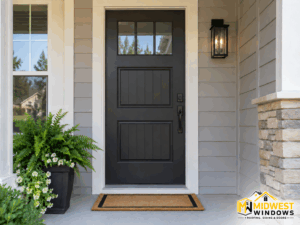
When viewed as part of a comprehensive exterior improvement plan, an entry door replacement offers both performance and design advantages.
Is It Worth It in 2026?
If your existing door is drafty, outdated, or builder-grade, upgrading to a modern energy-efficient system is a smart move.
While savings vary by home, the combination of improved comfort, reduced HVAC strain, and long-term value makes replacement a practical investment for Illinois homeowners.
Lower Your Energy Bills with a Smarter Entry System
If you suspect your front door is costing you comfort and efficiency, now is the time to explore modern replacement options. Schedule your consultation with Midwest Windows, Siding & Doors and discover how a precision-installed entry system can enhance your home’s performance in every Illinois season.